Canned Soup, Reconsidered: A Gut-Health Ranking for the Cold-Weather Aisle

Photo: Office of Price Administration, Public domain, via Wikimedia Commons
Canned soup is the quiet workhorse of the American pantry. It sits through heat waves andhurricanes, it feeds a cold, it fills a thermos. But the soup aisle is not one thing. A lentil soup and a cream of mushroom soup can share a shelf and almost nothing else.
This ranking is not about brand loyalty. It is about what the bowl does for your gut, and what you can do to make it better. I graded common US supermarket soup styles on four things: fiber, sodium, vegetable and legume content, and additive load. Then I added an upgrade for each tier, because the can is a starting point, not a verdict.
How the grading works
- Fiber: A is 6 grams or more per cup; B is 4 to 5.9; C is 2 to 3.9; D is under 2.
- Sodium: A is 480 milligrams or less; B is 480 to 700; C is 700 to 1,000; D is over 1,000.
- Vegetables and legumes: More is better, especially beans, lentils, and chunky vegetables.
- Additives: Fewer gums, flavor enhancers, and added sugars is better, though these are not automatically deal-breakers.
A soup does not need an A in every category to earn a place in your pantry. It just needs to be honest about what it is.
Grade A: Bean and lentil soups
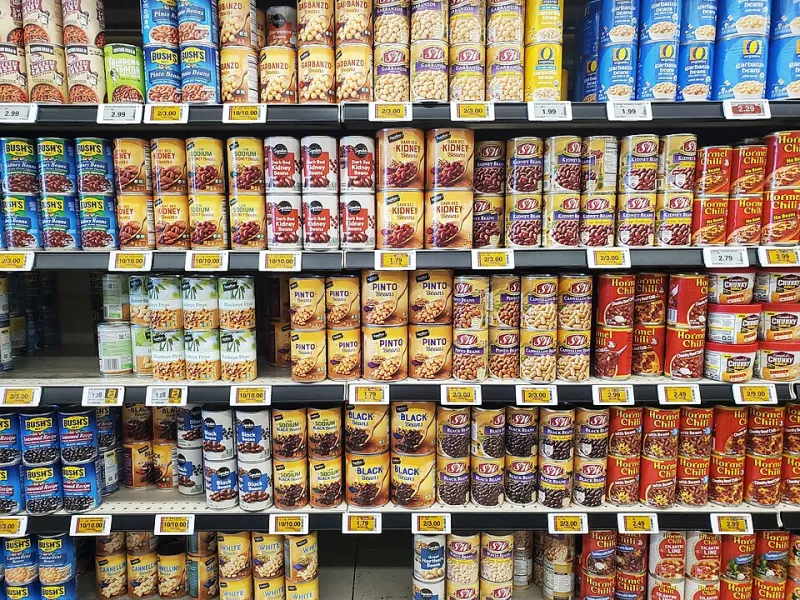
Lentil, black bean, and mixed bean soups are the best of the canned bunch. A typical cup can deliver 6 to 10 grams of fiber and a useful hit of plant protein. They also contain real legumes, which is the point. The weak spot is sodium, which often lands between 700 and 900 milligrams per cup.
Upgrade: Pick a low-sodium version when you can. If you cannot, add a splash of water or unsalted broth and a handful of frozen spinach. The fiber stays, the salt dilutes, and the bowl gets greener.
Grade A-: Minestrone and vegetable-bean soups
Minestrone is a solid middle ground. It usually has beans, tomatoes, carrots, celery, and pasta, which means fiber and volume in the same spoon. The pasta is not a problem; the portion is. Some versions are mostly broth with a garnish of vegetables, so look for a chunky texture and at least 4 grams of fiber per cup.
Upgrade: Add a half cup of canned beans or frozen mixed vegetables. If you are watching sodium, choose a low-sodium stock and season with black pepper and a squeeze of lemon.
Grade B+: Split pea and black bean soups
Split pea soup is fiber-rich and satisfying, but it can be salty and low on vegetables. Black bean soup is similar: good fiber, decent protein, sometimes a lot of sodium and added sugar. These are hearty choices, not delicate ones.
Upgrade: Thin with water or unsalted broth, then stir in frozen corn or diced bell pepper. A spoon of plain yogurt or a squeeze of lime adds freshness without needing more salt.
Grade B: Tomato and vegetable soups
Tomato soup is a comfort food, but a plain canned version is often low in fiber and high in sodium. Vegetable soup can be better, especially if it has beans or barley, but many versions are mostly broth and carrots. Check the fiber line. If it is under 3 grams, treat it as a base.
Upgrade: Add canned lentils or white beans, frozen kale, and a pinch of dried oregano. You turn a side dish into a meal without turning on the stove for an hour.
Grade C+: Chicken noodle and rice soups
Chicken noodle soup is lovely for a cold, but it is not a fiber powerhouse. Most versions have fewer than 2 grams of fiber per cup and a lot of sodium. The protein is useful. The vegetables are usually sparse. Rice soups have the same problem: starch and salt without much roughage.
Upgrade: Add frozen peas, carrots, and a handful of chickpeas or white beans. If you want to keep the classic flavor, use a low-sodium broth and add a squeeze of lemon at the end.
Grade C: Cream soups and cheese soups
Cream of mushroom, cream of chicken, and broccoli cheese soups are low in fiber and high in sodium and saturated fat. They are also often used as ingredients rather than eaten alone. That is fine, but do not count them as a vegetable serving. A broccoli cheese soup may contain more cheese than broccoli.
Upgrade: Use a half can of cream soup plus a half can of low-sodium broth, then add frozen broccoli or cauliflower. You keep the creamy texture and stretch the vegetables.
Grade D: Broth and consommé
Broth is not a meal. It is a base, a sipping drink, or a way to add flavor. On its own, it has almost no fiber and can be very salty. That does not make it bad. It makes it a supporting actor.
Upgrade: Use broth to cook lentils, rice, or barley. Add frozen vegetables and a can of beans. Now the broth is doing something useful instead of just being warm and salty.
The boxed-soup question
Boxed soups often taste fresher and can be lower in sodium, but they are not automatically better. Check the fiber and protein. A creamy boxed tomato soup with 2 grams of fiber is still a low-fiber lunch. A boxed lentil soup with 8 grams is a good find. The package format is not the nutrition label.
The bottom line
Canned soup is a convenience food, and convenience foods deserve realistic standards. Aim for bean or lentil soups most often, keep a few brothy or creamy soups for flavor and comfort, and add fiber where you can. A can of soup is not a gut-health plan by itself. But with a handful of frozen vegetables and a can of beans, it gets a lot closer.